



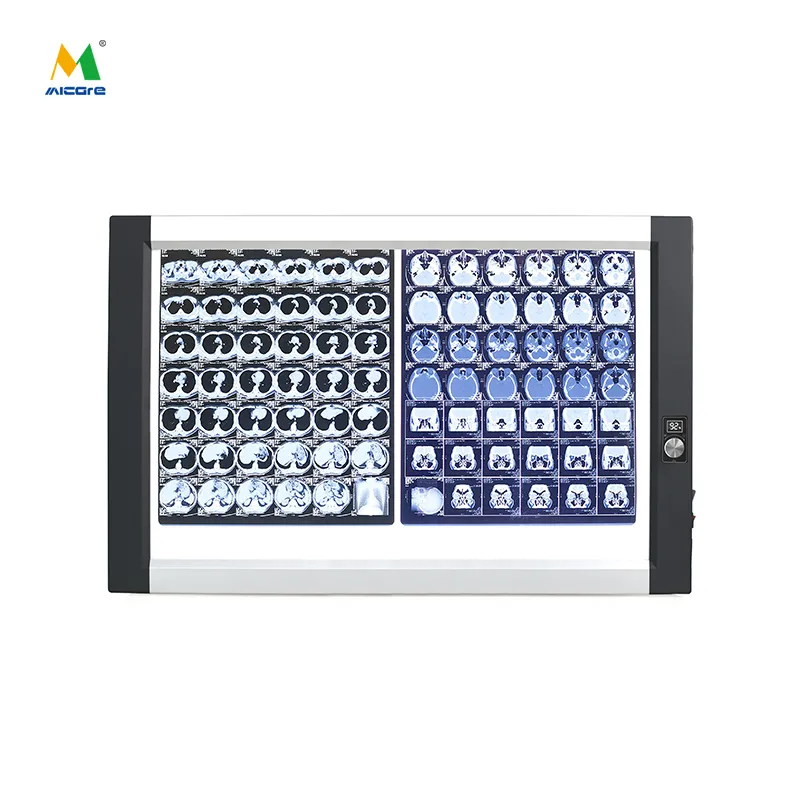
Medical film viewers are still a necessary tool of diagnosis in the field of radiology, and their clarity has direct influence in the correctness of the interpretation. There are several determinant aspects, which define the degree to which medical professionals can see and interpret X-ray films. Learning about these factors assists medical institutions in choosing the best viewing equipment and preserving the accuracy of diagnoses.
Lighting Uniformity
The basis of the clear film viewing is the even- illumination within the whole surface. The effects of uneven lighting are hotspots or dark areas blotting important information. Quality medical watching systems employ high-quality LED backlight fluorescence with excellent diffuser in order to cancel the difference in brightness. This makes radiologists get accurate portrayals of the bone structures, soft tissues, and any probable abnormalities devoid of visual deformation.
Optimal Brightness Levels
Various X-Ray films have different brightness levels recommended to evaluate the films. Thick orthopedics films require more strength to display larger areas whereas the chest X-rays do not require too much strength. Control dials give variable brightness adjustment to suit each examination, and to avoid over- or underexposure, which obscures minor details. Professional-quality monitors will ensure that the output brightness of the monitor remains constant over a lifetime, without fading.
Color Temperature & Eye Comfort
Grayscale differentiation is influenced greatly by the light on the color temperature. Medical monitors with 5,000K-6,500K (light daylight condition) offer the natural watching conditions which will lower the ocular tiredness after lengthy observing. The contrast perception is better with cool white light less than warmer tones and this will help in the differentiation of similar gray shades, which can represent pathology.
Surface Quality & Anti-Glare Properties
The clarity is influenced by the surface material used by a viewer. Anti-glare processed high-transparency acrylic detects less reflection off ambient light and enhances clear details of images. Older viewers tend to have scratches or become clouded which degrade the image quality thus requiring periodic inspection and maintenance. In higher models, glare-reducing matte finishes are added to the elements thus driving away distraction more in bright reading rooms.
Viewing Angle & Ergonomics
Using good positioning eliminates parallax that is formed when looking extreme angles of viewing films. Quality viewers can also be maintained as well clear in all positions when the user stands directly in front of the view or viewing at the slight angles. Tilt adjustments of the equipment, as well as ergonomic designs, assist in stabilization of the radiologist in postures of long-term evaluation, which aids in continuity of visual attention indirectly.
Environmental Considerations
The light in the room has a devastating impact on the reading of the film. Ambient light of either extreme will override the film details either by exceedingly lighting it out or creating eye strains by being overly dark. Most of the modern reading rooms have regulated lighting system that balances medical viewers and ensures moderate viewing conditions. There are viewers with extrinsic ambient light sensors that already regulate the lights automatically.
By covering these aspects, like uniform illumination, effective control of brightness levels, best color rendering, surface quality and environmental factors, healthcare facilities would have assured that their medical film viewing environments allow their medical film viewing systems yield accurate diagnosis. With radiology departments still juggling between a digital and film-based workflow, the purchasing of powerful viewers continues to be important to ensure radiology confidence in areas where film sensitivity is still common. Appropriate technology allows filling the technological discrepancies, as well as conforming to the high standards expected of medical practitioners to provide accurate interpretation of the images.