



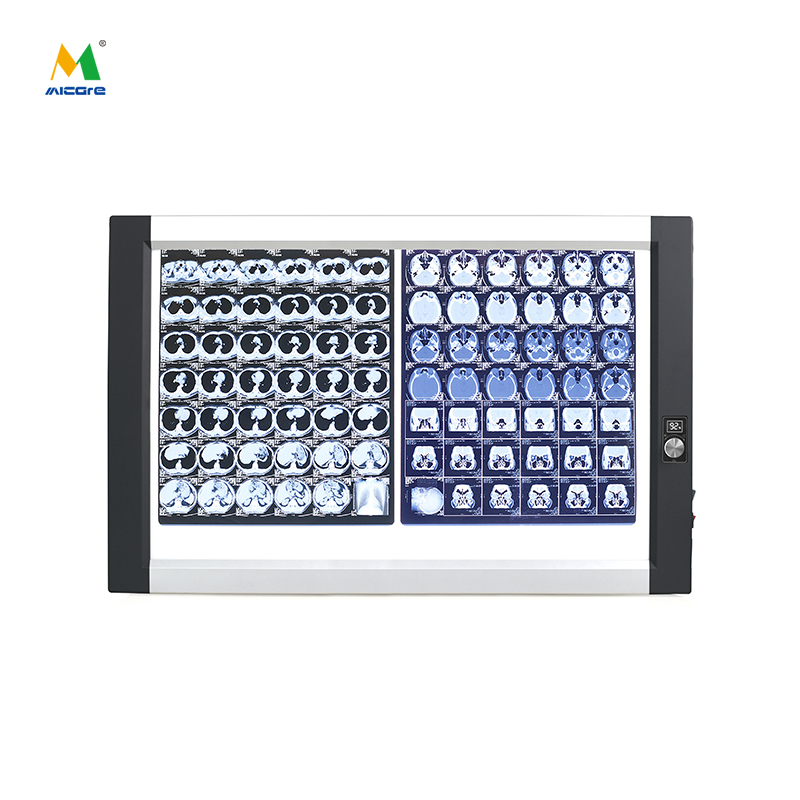
Although digitization is a trend with big implications in medical screening, many hospitals still utilize standalone X-ray view boxes-referred to light boxes or negatoscopes-to project film-based images. Although the radiology of the modern era is under the influence of digital displays, such older equipment can still be viewed as the necessary devices due to a range of practical considerations.
Reliability in Power-Dependent Environments
Simplicity and reliability are among the main advantages of standalone view boxes. Light boxes do not rely on complicated electronics like digital displays do in order to work; nor do they depend on reliable power sources or information monitors that must be carefully calibrated in order to deliver the information with precision. In areas where electricity is unstable or where there is a subtle IT setup they act as a surety to review X-ray films.
Cost-Effectiveness for Low-Volume Needs
A small film user may be a small clinic or rural-based hospital, and it may be that it is not necessary to maintain a complete digital workflow. Standalone view boxes need little maintenance- no need of software updates, calibration, and faulty replacements, making it an affordable alternative to rare film reading.
Compatibility with Legacy Systems
Not all the healthcare facilities have access to newer X-ray machines that offer analog and digital films. View boxes will be needed to interpret until these systems are being phased out or upgraded. Also, some legal or archiving issues can stipulate physical storage of the film, in which case light boxes to review retrospectively will be needed.
Ease of Use in Specialized Applications
Immediate availability of X-rays may be key in surgical and emergency scenarios where one cannot afford the time to boot up workstation. Trauma teams and surgeons more commonly use instant, glare free viewing on a light box when digital displays are inconvenient or when not available.
Durability and Longevity
Good view boxes, such as ours, are constructed so that they are uniformly backlit across the viewing area, and the upper layer of plexiglass is anti-glare (no glare is annoying to the eye and makes viewing difficult). Their quality workmanship means years of application with no decline in functional capacity even in cost-sensitive medical facilities.
Conclusion
Digital radiography is the future but standalone X-ray view boxes remain a critical part of healthcare because they are dependable, affordable and their existential mandate that suits legacy systems. As ever-increasing numbers of hospitals adopt full-scale digital workflows, such devices are still a viable tool when meeting certain clinical and logistical requirements.