
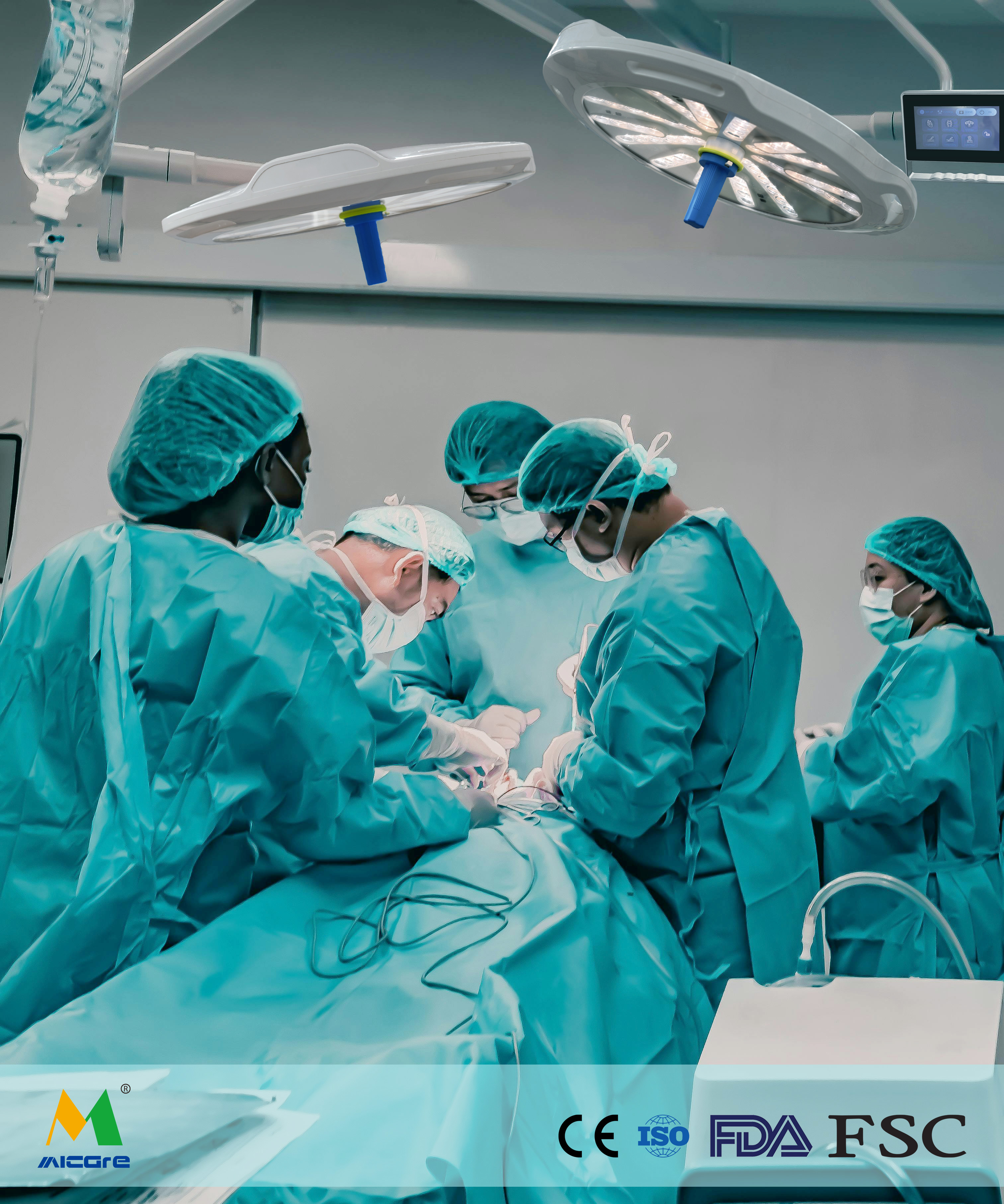
In a high-stakes Operating Room (OR), the quality of illumination directly dictates the pace and precision of a procedure. For surgical teams across Europe and North America, the shift toward CE-certified portable LED surgical lighting is more than a technical upgrade—it is a strategic move to eliminate bottlenecks and improve clinical outcomes.
Here is how these advanced systems are optimizing the workflow of modern surgical environments.
Surgeons rely on subtle color differentiation to distinguish between nerves, blood vessels, and various tissue types. CE-certified LEDs are engineered with a high Color Rendering Index (CRI) and specific R9 values (red color reproduction) that traditional lighting often lacks.
Shadow Suppression: By utilizing overlapping beams from multiple LED clusters, these units minimize shadows cast by the surgeon’s head or hands, maintaining a consistent "light well."
Cold Light Performance: Unlike halogen bulbs, LEDs emit negligible infrared heat. This prevents tissue drying (desiccation) and keeps the surgical team comfortable, reducing the fatigue that often leads to mid-procedure delays.
The trend in Western healthcare is moving toward multi-functional spaces. Fixed ceiling-mounted lights, while powerful, lock a room into a specific configuration. Portable units offer a level of agility that ceiling mounts cannot match:
Rapid Room Turnover: Portable lights can be repositioned or swapped between rooms in minutes, allowing facilities to adapt to back-to-back cases of different surgical disciplines.
Zero-Obstruction Placement: In rooms already crowded with robotic arms, anesthesia towers, and monitors, a portable light can be angled into tight spaces where ceiling arms might collide with other equipment.
For procurement officers, the CE Mark is the baseline for safety and reliability. Under the current Medical Device Regulation (MDR), this certification ensures the equipment meets rigorous standards for:
Electromagnetic Compatibility (EMC): Ensuring the light does not interfere with sensitive life-support monitors or imaging hardware.
Sterilization Protocols: High-end portable units are designed with smooth, non-porous surfaces and detachable, autoclavable handles, making them compliant with strict infection control standards.
Efficiency Comparison at a Glance
|
Feature |
Impact on Workflow |
Long-term Value |
|
50,000-Hour LED Life |
Eliminates bulb-failure delays |
Significant reduction in maintenance costs |
|
Battery Back-up |
Seamless operation during power shifts |
Enhanced patient safety and reliability |
|
Adjustable Spot Size |
Tailors light to the incision depth |
Faster visual focus for the surgeon |
Economic efficiency is as vital as clinical efficiency. LED technology consumes up to 70% less energy than halogen systems. For a hospital operating dozens of rooms, this translates into substantial annual utility savings. Furthermore, the longevity of LED modules means the technical team spends less time on repairs and more time on high-priority equipment maintenance.
Professional Takeaway: A portable surgical light is no longer just a "standby" tool. It is a primary instrument that provides the flexibility needed for ambulatory surgery centers (ASCs) and specialized clinics to maintain high-volume throughput without compromising on the quality of care.
Choosing the right lighting is about balancing technical specs with the practical needs of your surgical staff.
For more information, please contact us: Nanchang Micare Medical Equipment Co., Ltd.
Contact: Jenny Deng Phone: +(86)18979109197
Email: [email protected]


