



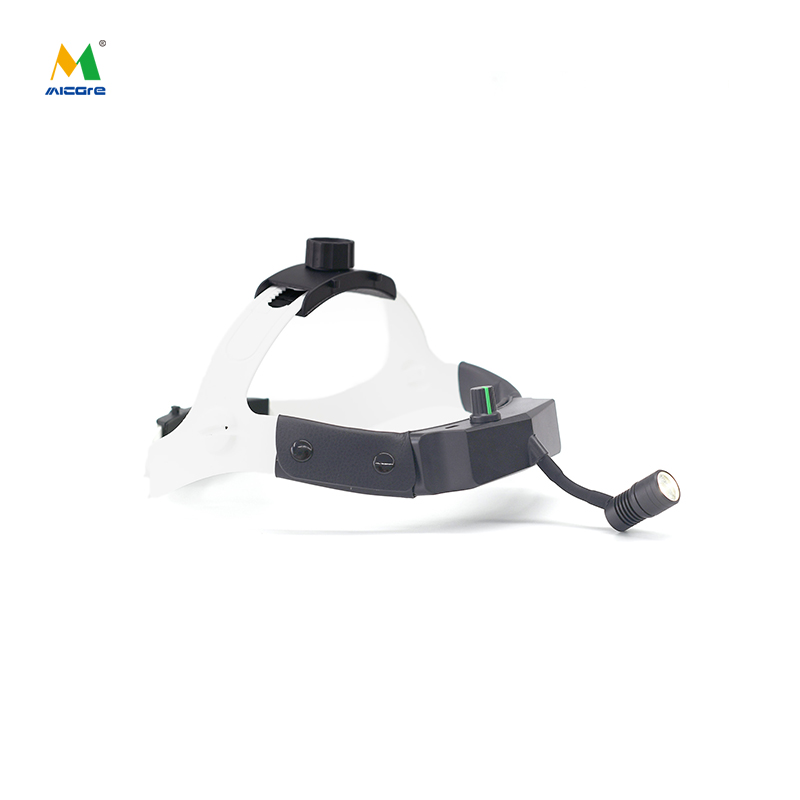
In a highly competitive health care arena, seeing is believing. The surgical headlight is not just a gadget; it's a surgeon's extension, lighting the deepest and narrowest of cavities with precision. But after prolonged hours of wearing a heavy, poorly-balanced headlight, the surgeon can suffer from neck and shoulder fatigue, which affects the patient's safety and surgical comfort. That's why it's crucial to get the best light weight surgical headlight for any medical practitioner. When there are so many choices available, it can be a difference-maker to know what features to look out for. This is a detailed guide to help you select the most appropriate light-weight headlight for your practice session.
Weight and Ergonomic Design: The Foundation of Comfort
Weight and weight distribution on the head is the most important consideration when you are deciding on a surgical headlight. Even a few ounces of excess weight in the headlight will strain the muscles of the neck, head, and back during a long procedure. The best lightweight headlight is one that doesn't weigh over 150 grams (about 5.3 ounces) and has a headborne unit. But, weight is not the only thing, balance is also important. Try on designs with a low, rounded design, so that the weight is spread across your forehead and not pulled forward. Soft non-slip adjustable straps prevent pressure points and provide a secure fit. In some cases, the high-end versions even have a modular design where the light source is detached from the headpiece (fiber-optic remote systems) which places even less burden on head and neck.
Brightness and Beam Quality: Clarity Without Compromise
This is because a light headlight is of no use if it doesn't provide enough light. Brightness comparisons should be made based on the light intensity that can be adjusted, generally between 30,000 to 50,000 Lux, with a working distance of 40 cm. But raw brightness is not all. What really makes surgery more precise are the quality of the beam, spot size, uniformity and color temperature. The ideal headlight should give a crisp white beam (5000K to 6000K, the color temperature which corresponds to the natural daylight) which enables the differentiation of tissues to be accurate. It would also be very advantageous if the size of the spot could be varied because in general dissection one needs a wide view while in microsurgical work a narrow, concentrated position is required. For instance, Nanchang Micare Medical Equipment Co., Ltd. produces the latest, most advanced optical systems of headlights with a minimal weight, which provides high intensity, shadow-free illumination without compromising performance.
Battery Life and Power Source Reliability
A surgical headlight is just as useful as its light source. A dim light source or battery that has run out can be the surgeon's worst nightmare in a critical procedure. If you're selecting a light weight headlight, ensure you take into account the battery system. Check for models that use rechargeable Lithium-ion batteries that provide a dense source of energy in a small light package. The battery must be able to run for at least 4-6 hours on one charge, preferably with the option of a back-up battery or a belt-clip replacement power pack that can be changed during the procedure without breaking the flow of work. Plus, take into account the charging system, and if they offer a fast-charging feature and a battery life indicator, then there's no need to worry about unexpected power failures. Keep in mind, the power source must be easily removable for easy mobility without extra weight on your head.
Durability, Hygiene, and Ease of Maintenance
When it comes to the sterile setting of the OR, durability and hygiene are a must. The highest quality lightweight surgical headlights are made of anodized aluminum or impact and corrosion resistant reinforced medical plastics that are safe for the body. Headlights are often exposed to fluids and should be disinfected regularly, search for headlights that have an IPX rating of at least IP54, meaning they are completely covered and waterproof; and are not susceptible to optical or mechanical damage when disinfected with hospital fluids regularly. Ease of maintenance is also important, including headlights that are easier to detach and autoclavable light guides or fiber optic cables, and making sterility procedures easier. By investing in a long-lasting, easy-to-clean headlight from a trusted brand like Micare, you'll protect your investment for years to come while ensuring that you get a product that lasts and continues to perform well.
In summary, the most important aspect of selecting the best light weight surgical headlight is to strike the balance between comfort, optical performance, power reliability, and durability. Through ergonomic design, best beam quality, battery life and strong build quality, you can choose a headlight that can not only save your body but also increase the accuracy of your operation. A good headlight is a must have to provide your patients with the best possible care, whether you're doing complicated microsurgery or routine general procedures.