



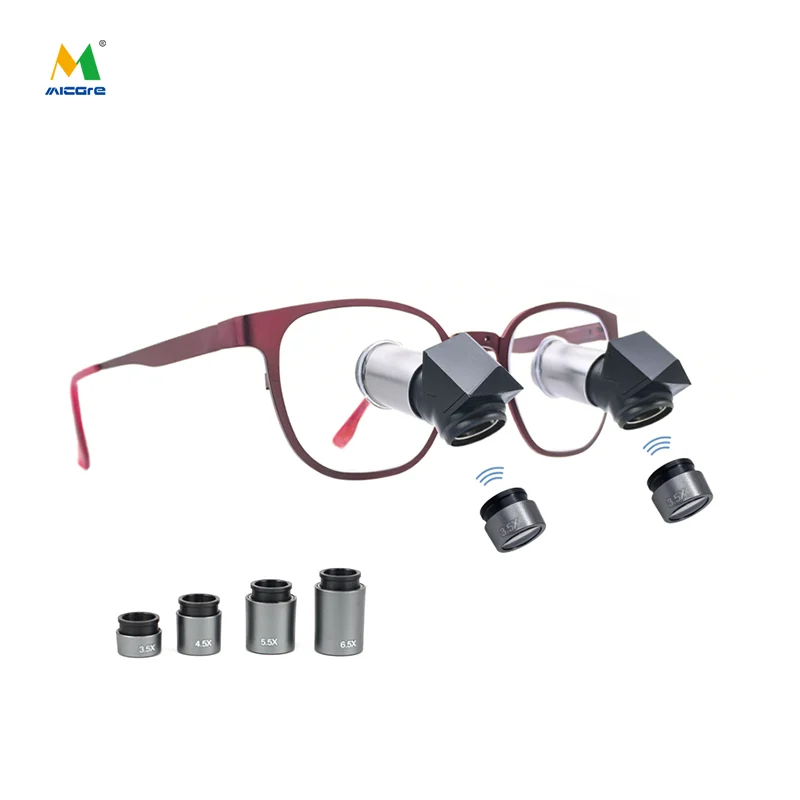
The precision in the high stakes world of contemporary surgical practice is not an option, it's a must. In delicate nerve repair, the success of the repair can depend on the fraction of a millimeter. In the complete removal of a tumor, a fraction of a millimeter can make the difference between successful removal and failure. In a microsurgical anastomosis, a fraction of a millimeter can make the difference between success and failure. The human eye is an amazing organ, but there are certain things that it can't do. Human eye is a great organ, but it's not good at small things or depth perception. That's where medical loupes are becoming a must have. These high-tech optical instruments are not just about magnification, they are the tools that can make a surgeon more capable, and create greater patient safety and better surgical outcomes. Let's see how medical loupes take surgery to the next level.
Enhanced Magnification and Visualization of Fine Details
The most apparent benefit of surgical loupes is the ability to see small structures as larger-than-life images. A standard surgical loupe has a magnification of 2.5x to 8x, enabling the surgeon to view the anatomy in a way that would not be possible without magnification. In surgical specialties such as plastic surgery, neurosurgery, and vascular surgery, where manipulation of small vessels, nerves and sutures are common, this enhanced visualization is especially important. These fine details can be revealed with loupes, allowing for accurate incisions, precise suturing, and improved tissue handling. This not only ensures more precise surgical procedures, but can also lead to faster recovery for patients and fewer postoperative complications due to decreased tissue damage.
Improved Ergonomics and Reduced Fatigue
Magnification is key, but medical loupes provide ergonomic advantages for accurate precision over time as well. Surgeons may hunch their shoulders, strain their necks and back in order to look at the surgical field without loupes and over time develop neck, back and shoulder strain. The surgeon will also have the option to use high-quality loupes, which will offer the benefits of maintaining a natural, upright posture while providing the surgeon with an extraordinary view of the surgical site, especially if they use a through-the-lens (TTL) design and have adjustable working distance. This ergonomic benefit helps to minimize physical fatigue in lengthy and intricate procedures. The less tired a surgeon is, the more concentrated he or she is, and concentration equals precision in an entire surgery.
Superior Depth Perception and Hand-Eye Coordination
Being able to see the flat image magnified is not enough for true surgical precision, it is important to sense the depth and spatial relationships accurately. The standard loupes provide a three-dimensional image since each eyepiece provides a slightly different perspective on the object like in the real world. This stereoscopic vision is important for suturing fine sutures under tension and for performing tasks between thin layers of tissue. There are some sophisticated models that now incorporate a prismatic or Galilean optical system that will further improve depth perception and offer a greater field of view. The enhanced spatial awareness enables surgeons to estimate distances more precisely, minimizing the chances of damaging any other healthy tissues.
Integrated Illumination for Optimal Field Clarity
Ideal magnification creates an ideal environment for surgery, however, even with ideal magnification, poor lighting condition can have a negative effect on surgical precision. Light from the surgeon's head or hands can create shadows in the surgical area that can make it difficult to see important structures. These days, many loupe manufacturers, including such as Nanchang Micare Medical Equipment Co., Ltd. provide medical loupes with built-in LED headlights. These coaxial lights are meant to fit seamlessly into the surgeon's line of sight and deliver focused, shadow-free lighting, right where it's needed. This magnification and optimal lighting provide optimal visibility of the surgical field, with clear and bright vision of the tissue, even in deep and narrow cavities. Micare's range of medical headlights and loupes, for example, have been designed to complement each other and provide a complete solution for difficult microsurgical tasks and improve the precision of the instrument's use.
To sum up, medical loupes are more than just magnifying glasses. These are complex optical devices that provide greater visual acuity, improved ergonomics, better depth perception and optimum lighting, which are all important elements in ensuring better surgical outcomes. From intricate microsurgery to dentist work to general surgery, loupes can enable surgeons to operate with greater confidence and accuracy and, in turn, better care for all their patients.