



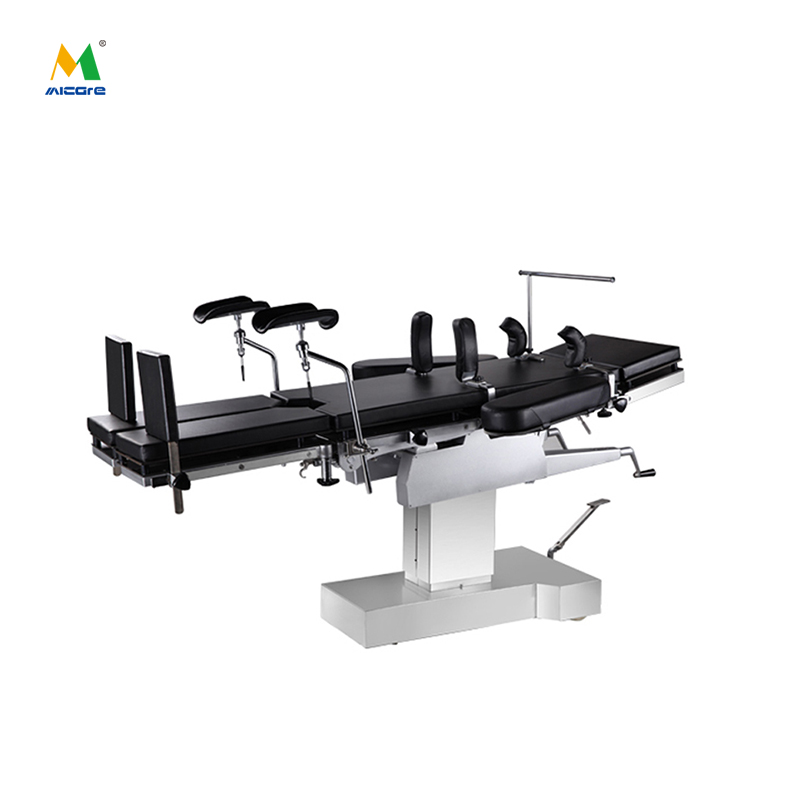
Choosing the right surgical operating table is one medical equipment decision with far-reaching consequences for the operation, staff workflow, and importantly-patient safety. Between universal equipment solutions to specialized equipment like orthopedic tables, medical institutions are faced with several points of consideration when making such a big purchase. Check out this helpful guide to determining the right surgical operating tables.
Understanding the Different Types of Surgical Tables
How it could work, again. Step 1 Identify categories and their clinical uses What are the surgical case types you're going to deal with, and why are these classifications clinically useful? The surgery types your hospital is performing most often will have the single largest bearing on your choice.
General surgical tables are versatile enough for almost any operation. They are used in cardiovascular, pediatrics, gynecology and general surgery. Their height, length and tilt are adjustable making them ideal for all-purpose surgical centers where many different surgical cases are performed. It is possible to remove the headrest segment if it so desired, by then allowing room for different types of quick interchangeable headrests.
Orthopedic surgical tables are designed to accommodate the precise manipulation and positioning required for complex bone and joint procedures, typically performed in orthopedic specialty centers. In these tables specialized pads and mechanisms for a more precise repositioning, stabilization, mobilization and control. Additionally these tables usually can be better implemented with improved imaging technology to use fluoroscopy to do fracture reduction and placement of joint implants under the live image guidance and control by surgeons.
Neurosurgical tables, those with advanced and stable headrest support designs, adaptable for precisely positioning a patient's head for various brain and spine procedures also have a blood flow support and respiratory aids designed to manage challenging, long-duration procedures.
Gynecology operating tables are designed for delivery of the baby, women's examination as well as some particular gynecological operations. Gynecology operating tables are frequently supported with attachments including stirrups, split-leg positioners and well leg-holders, which the posture support.
Radiolucent imaging tables are ideally used for minimally invasive fluoroscopic-based procedures which consist of: Endovascular procedures; Vascular procedures and; Pain procedures and treatments. They make sure to keep the radiolucency so the image is clear.
Key Features to Evaluate
When you have chosen which table category you wish for, check the options which will allow you the best performance and patients safety.
Versatility and Adaptability: It is also crucial for the table height, tilts, and segment positions to be customizable. Surgeons can thus maintain a working posture ergonomically. Left and right table tilts can also be utilized for visibility within body cavities. Separate table sections should therefore be adjustable to work through abdominal bends and extremities correctly.
Weight Capacity and Patient Size: A variety of patient sizes and weights are catered for by operating tables. The capacity for general surgical operating tables varies, and the availability of bariatric models ensures even larger weights will be catered for. The trend of modern operating tables, for example is to allow greater patient weight restrictions in a safe environment. Before you order, always ensure that the dynamic load capacity of your operating table is higher than the weight limitations in your hospital.
Imaging Compatibility: If the facility employs intra-operative imaging, radiolucency is essential. Radiolucency is desirable so that the table does not obstruct X-ray imaging (or fluoroscopy imaging without an obstruction. The radiolucency of the table is maximized when its dimension as large as possible so that it creates the least obstruction for good images. The integration capabilities of the newer tables also integrate with angiography, MR and CT systems.
Ease of Operation: A typical operating table may also be driven by a mechanical, hydraulic, or electric mechanism. Electric tables are operated via a remote control. The hydraulic table operated the foot pedal. What do your surgery workstation have better, based on our team's workflow and our staff training.
Accessories and Compatibility: Check that necessary accessories can be attached to the table, such as the headrest, arm board, leg holder and side rails. Through attaching side rails, other accessories can also be assembled. The facility to change the table top and by means of separate trollies may also improve the work flow.
Mobility and Installation Considerations
Selecting whether a portable versus a fixed operation table is right for you is based on the amount of room in your facility and workflow practices.
Stationary operating table systems are bolted into the floor thus resulting in optimum stability and hygiene. Due to the vertical column extra medical equipment like X-ray units may be slid under the tabletop. This system has improved legroom for the operating staff and can be coupled to diagnostic systems via an interface unit.
Mobile operating tables allows mobile tables to shift between ORs. These units may have a short foot to allow room for the legs of the surgical staff, but the casters can be harder to keep clean with an increase amount of space between them . Most are specialized for one discipline with a base, column and table top in a cohesive unit.
Common Surgical Positions and Table Requirements
Your particular tables will probably be suitable for the majority of types of procedures. In each instance the way you get to positioning on the operating table is a very important patient safety concern, for the most part in an effort to put you to the. The main positions would possibly be:
Supine Position: The natural resting position, most common for general surgeries.
Trendelenburg Position: Upper torso lowered and feet raised, used for pelvic and lower abdominal procedures.
Reverse Trendelenburg: Head-up and feet-down position, used for head and neck procedures.
Prone Position: Patient lies on their stomach, used for cervical spine, back, and rectal area procedures.
Lithotomy Position: Supine position with legs raised and abducted, requiring stirrups .
Lateral Position: Patient on non-operative side, used for hip, chest, or kidney procedures .
Fowler's Position: Sitting at a 90-degree angle, used for neurosurgery and facial operations .
Since Micare Medical is focused on producing medical lights, the operating shadowless light and the medical examination light, for operating tables and other surgical equipment we cooperate with reliable partners for the operating room solutions. If you would like to inquire about our products, please contact us to view the whole product lines.