



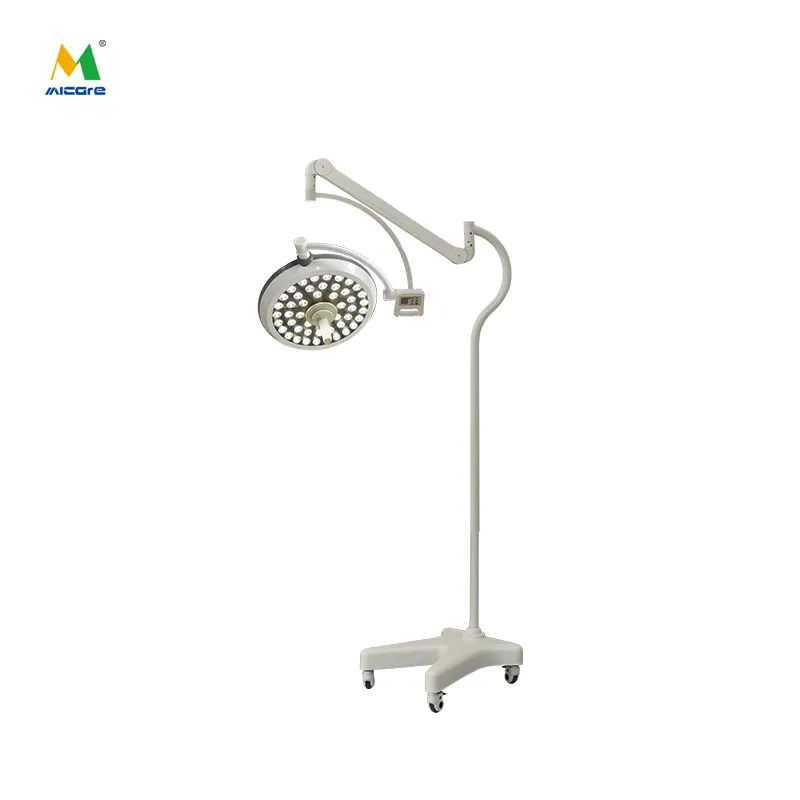
One problem for any hospital is efficiency in the ORs around the world. Efficient OR leads to better patient outcomes, higher service quality, and greater profitability, thanks to faster turnover, reduced staff fatigue, and fewer interruptions. Though several factors affect OR workflow, one that is actually often overlooked is OR lighting. Because traditional lights are often faulty, they lose time, generate unwanted heat, and light up without control. LED lights provide the solution. The high-tech innovative Nanchang Micare Medical Equipment Co., Ltd actually specializes in researching, developing, and producing cutting-edge medical lights such as operating shadowless lights, medical examination lights, and LED ceiling lights. LED surgery lights improve the efficiency of the OR in multiple ways.
Less Time Spent Repositioning Lights
Compared to the old florescent lights, their main selling point is that they save time and effort being readjusted. Halogen lights create shadows with the surgeon's movements of hands and surgical instruments directly in front of the light. In many lengthy surgeries, this makes it so staff need to keep readjusting the light, but this problem is avoided with multi-source arrayed LED surgery lights. Due to their design which is built with multiple LEDs in a specific pattern, LED surgery lights possess very high shadow dilution from 90% and above. Since they have an array of individual LEDs, even when the light from one is blocked, light from another will automatically "fill" in the shadows so that the operating field appears illuminated evenly. Many models have touchless, IR activated controls and are often combined with an individually-operable handle, and in this way surgeons use their own hand and finger to direct the light to the desired field, thus minimizing adjustments. The more time not spent fiddling with the lights, the more time there is on the patient and the fewer procedures that could be performed will be lost. The Micare design has no shadows and is built to facilitate long surgical sessions.
Faster Turnover Between Cases
Between each procedure, the OR worker will clean and set up the OR for the next operation. While doing this, with the halogen lights, two problems arise. The first is that the lights generate a high amount of heat and will be hot to the touch. Staff actually need to be careful and ensure the light has cooled before it can be cleaned, or they could burn themselves. Second, it is possible that one of the halogen bulbs can break. While it may actually seem small, broken glass can seriously injure whoever is cleaning the OR. Both problems are completely avoided by the use of LED surgery lights. The lights are manufactured with much lower radiant heat than the halogen lights, making them cool to the touch immediately after use so that they can be cleaned right away. LED light surfaces are also smooth and have sealed bodies without any crevices, making them easy and quick to clean. Many models have autoclable, bacteria-resistant, removable handles, reducing exposure to other surgeries.
No Unexpected Bulb Failures
What can actually cause delay in surgery more than a burnt-out bulb? Halogen bulbs last about 500-2000 hours, not giving any notice when it is about to burn out. Before any further surgery, work has to actually stop to replace the bulb, and this can mean staff member needs to get on platform and install new bulb, or an emergency light source needs to be brought in. All this can be completely avoided with LED surgery lights. An LED bulb lasts an average of 30,000-50,000 hours-roughly 10 to 15 years! Instead of suddenly burning out like a halogen light, LED lights fade over years, meaning that arrangements can be made long before they become of no use. Majority of LED lights use multi-LED arrays so that if one component fails, the rest of the lights remain lit at their full potential. Some have battery back-up so that power failure won't mean surgery failure either. This is both money saving, and it prevents major time delays from occurring.
Reduced Surgeon Fatigue for Better Focus
The core component of human efficiency is actually comfort. Halogen lights are strong, making doctors and staff sweat more and eye strain due to their harsh glare. When a team is fatigued, they work at a much slower pace, making more mistakes and reducing performance significantly. In a LED light set up, heat does not radiate, making the entire surgical room comfortable for working. Doctors also have better color rendering and are presented with a natural light color (4000-5000K) allowing them to spot tissues easily. Their eyes will not get tired easily and they can be more alert during surgeries. An agile and brave team is also one who is comfortable, and has vision. It really adds up as an advantage not to get tired out easily running from room to room. Micare designs all their lights with reduced heat radiation in mind so doctors can get their work done during those long surgical operations.
Conclusion
By saving time with LED surgery lights, the surgical turnover time will be much more speedy, there will be no unexpected failures or time delays due to needing to fix the lights, and the surgeons won't be as fatigued. Every single benefit added up will lead to an increase in cases and a decrease in cost, improving the end result for the patients. Nanchang Micare Medical Equipment Co., Ltd has the goal to be innovative and produce medical lights, offering high quality products to the modern OR including surgical tables, endoscopes, and more. It's not often that there is something that a hospital could invest in that's beneficial at so many levels, but LED lights truly are the best there is.