



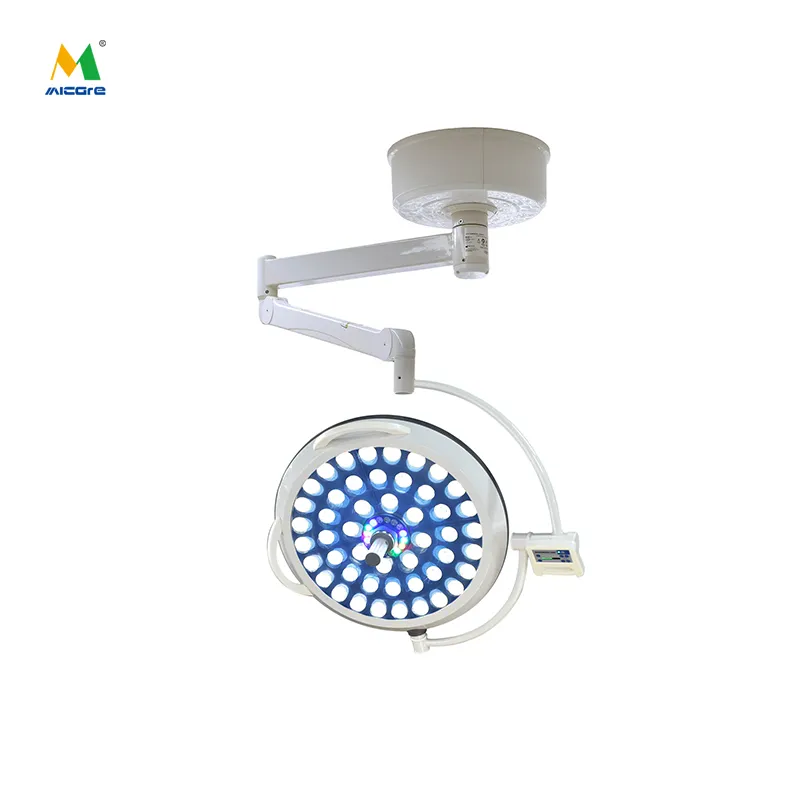
With the current operating rooms, shadowless surgical lamps have been essential in providing optimum visibility in operating process. Even light distribution is one of their most important qualities since it is essential to surgical precision and patient safety.
Eliminating Visual Obstructions
The darkness of the surgical field is addressed by uniform light distribution all over the surgical field making shadows negligible which may block essential parts of the anatomical structure. It is done by accurately designed multi-point LED arrays that form intersecting light fields so that there are no dark areas when a surgical tool or hand partially obscures the light path.
Enhancing Color Accuracy
A light field with uniform distribution of light will have a constant rendering index and color temperature that will be consistent over the entire surface under illumination. This enables the surgeon to make precise differentiation of tissues, vessels and other constructs with differences in colors being preferable in multifaceted procedures where the differentiation of specific tissues is essential.
Reducing Eye Fatigue
Different intensities of light results in surgeons having to continuously change focus on the brighter and lighter areas causing Bruce strain in surgeons during long proceedings. There are shadowless lamps that have evenly distributed light so that the medical teams can operate long time without straining their eyes unnecessarily.
Supporting Different Surgical Approaches
Depending on the surgical specialty, there is a need to have uniform illumination. The shadowless lamps we make provide us with light distribution patterns that are adaptable to various procedures: wide-area lighting required in general surgery, or the denser field required of microsurgery.
Ensuring Procedure Consistency
Unified illumination allows constant quality of visual conditions during the entire process of the surgical procedure by incision to suture. The stability is desirable especially in long processes, where long-term stability of a process would greatly influence surgical results.
Through the provision of optically-intelligent levels of even illumination, such systems are used to enable surgical teams to work at the peak of their abilities and comfort in the maintenance of visual image. The particular treatment of light insured by surgical technique improves progressively, and the need to have the light distribution very precisely will become increasingly significant.